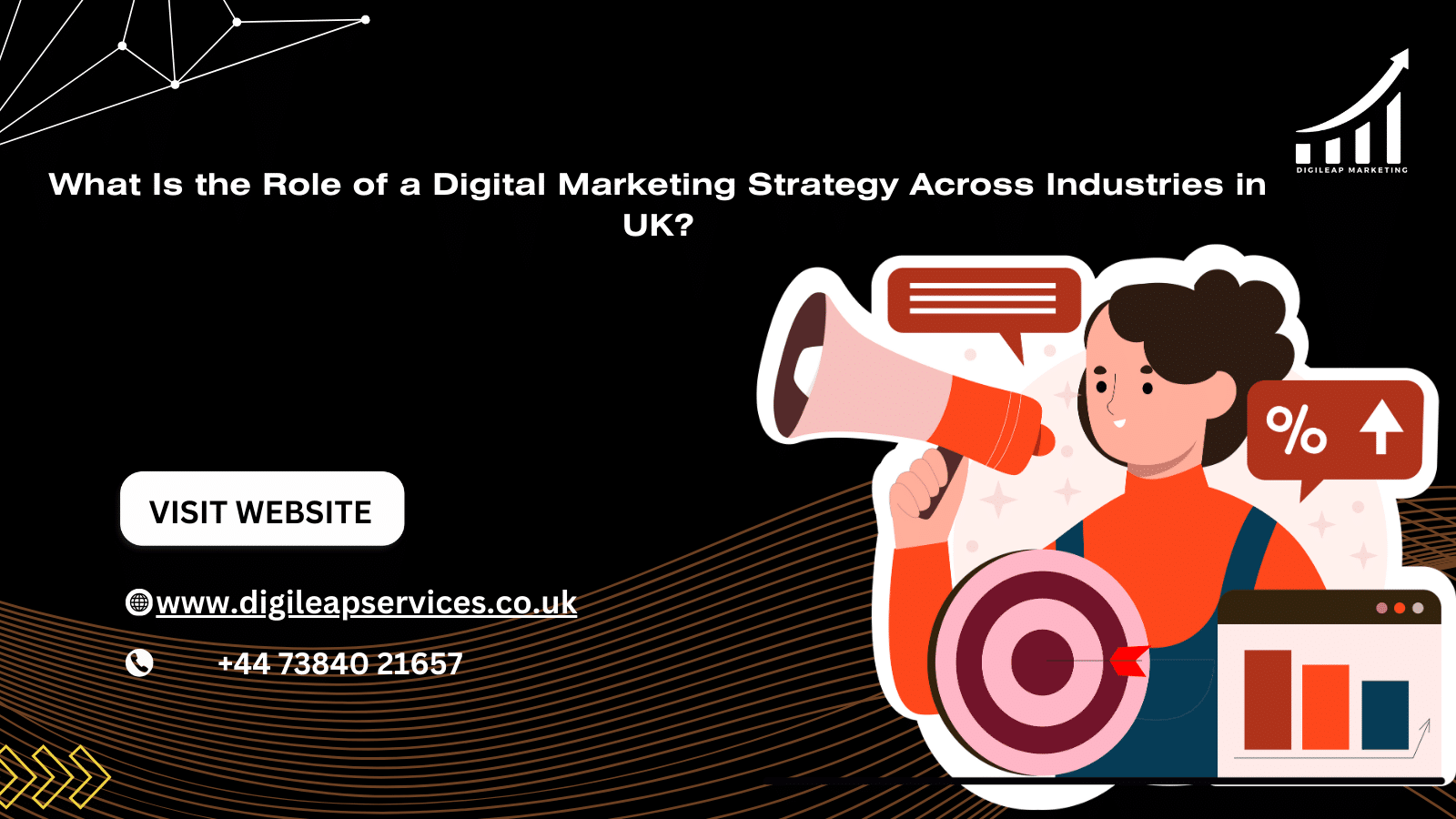
What Is the Role of a Digital Marketing Strategy Across Industries in UK?
Introduction
In today’s fast-moving world, businesses in the UK — whether a small bakery in Manchester or a big insurance firm in London — need a well-planned digital marketing strategy to stay visible, attract new customers, and stay ahead of the curve. Indeed, a solid digital plan can turn clicks into customers. According to recent figures from the Office for National Statistics, over 95% of UK households now use the internet, which makes online presence more important than ever before. For firms looking to grow, that shift isn’t optional — it’s essential. If you want help tailoring a plan like this, you might check out how Digileap Services approaches such challenges on their site: digileapservices.co.uk
Given that context, this blog explores the role of a digital marketing strategy across different industries in the UK. We’ll see why it matters, how it adapts to various sectors, and what every business — big or small—should consider.
Why a digital marketing strategy matters for modern UK businesses
In the past, you could rely on foot traffic, print adverts or word-of-mouth alone. But now things have changed drastically. Because so many people are online, a digital marketing strategy ensures that your business shows up where customers spend much of their time.
First off, it helps you reach a larger, more relevant audience — not just people who happen to pass by your shop. For instance, a local florist in Birmingham could attract customers all over the region by using social media ads or search-engine visibility. Secondly, it helps build trust: when a business has a clear website, active social media, and good reviews online, people feel more confident. Finally, it’s cost-effective — digital campaigns often cost less than traditional ads, and you get data to see exactly what works (or doesn’t).
Thus, for any business that wants to grow and stay competitive — whether retail, services or manufacturing — a good digital foundation is no longer optional.
How a digital marketing strategy adapts to different industries
Not all sectors are the same, so a “one-size-fits-all” approach doesn’t work. Instead, a digital marketing strategy must be tailored. Below are some ways industries differ — and how marketing adapts.
Retail and e-commerce: For online or physical shops selling goods (clothing, electronics, groceries), a strategy often focuses on product discovery. That means SEO for product pages, ssocial media ads, and perhaps retargeting to remind folks who browsed but didn’t buy.
Professional services (e.g. law firms, consultancies, dentists): Here the emphasis is on building credibility. A business might publish helpful blog posts, client testimonials, or case studies — showing expertise and reassuring potential clients.
Hospitality and leisure (hotels, restaurants, gyms): Timing and visual appeal matter most. So the plan may include enticing photos, promotions for weekends or holidays, user reviews, and active social media engagement to encourage bookings.
B2B industries (manufacturing, wholesalers, distributors): For these, a digital presence is often less about flashy ads, more about informative content, reliability, and professional outreach—maybe LinkedIn posts, whitepapers, or webinars to show competence and build relationships.
Because each industry has different customer behavior and purchase cycles, a thoughtful digital marketing strategy creates the right tone and channels.
Core components every digital marketing strategy should include
No matter the industry, an effective digital marketing strategy usually contains these building blocks:
Clear goals & audience definition — know who you are trying to reach. Are they teenagers buying sneakers? Executives sourcing industrial parts? Families booking a hotel room?
Website and SEO presence — a well-built website that loads fast and is easy to navigate, coupled with search engine optimisation so that people can find you.
Content that adds value — blog posts, articles, videos or reviews that address customer questions or concerns, building trust and positioning the business as helpful and knowledgeable.
Social media and online advertising — using platforms where your audience spends time, and running targeted campaigns to boost visibility.
Analytics and feedback — keeping track of what works, what doesn’t, and refining the plan based on real data.
With these components working together, businesses are better placed to attract, convert and retain customers regardless of their field.
Challenges and how to overcome them with a strong digital marketing strategy
Of course, going digital isn’t always smooth sailing. There are some common hurdles — but a well-thought-out digital marketing strategy helps navigate them.
Competition is fierce: Many businesses are online already — so standing out means having a unique voice. Overcome this by offering genuine value: thoughtful content, great customer service, or niche expertise that competitors don’t highlight.
Limited budgets (especially for small businesses): Sometimes businesses fear that digital efforts will be expensive. But starting small — maybe a simple website, basic SEO, and social media posts — can already make a difference. Use analytics to spend money only where it matters.
Keeping up with fast-changing platforms: Social media platforms and search-engine rules change often. That’s why your strategy should be flexible, allowing regular updates, testing new ideas, and responding quickly to changes.
Measuring return on investment (ROI): Sometimes it’s hard to see whether online efforts actually paid off. A good strategy defines clear metrics — like leads, enquiries, or sales — so you can measure success realistically.
By anticipating these challenges and building flexibility into the plan, businesses position themselves for long-term growth and sustainability.
Conclusion
In short, across all sorts of industries — retail, services, B2B, hospitality — a carefully crafted digital marketing strategy is not a luxury. It’s a foundational tool for growth, visibility, trust, and customer connection. By adapting to industry-specific needs, focusing on meaningful content, and measuring what works, UK businesses can thrive even when competition is stiff and customer habits shift fast.
TL;DR
A strong digital marketing strategy helps businesses across the UK reach more of the right customers, build trust online, and operate cost-effectively. Whether you sell goods, offer services, or run a B2B enterprise, tailoring your online presence—with a fast website, useful content, social media or ads, and smart analytics — makes all the difference. Despite challenges like competition and shifting trends, a flexible and well-planned strategy is the key to lasting success.
Take Action
If you’re ready to boost your business’s online presence without the guesswork, visit Digileap Servicesto explore tailored digital marketing solutions that fit your industry and budget. Let’s get your brand noticed — the smart way.